


Friday, January 16, 2015
Continuous POV Cameras For Compliance
It has been called lifelogging, a means to record continuous clips of point-of-view images as you work or play. It was suggested and tested for easily gathering information about in-store conditions. The Narrative-2 is a recent example. Relatively cheap, wearable and easy to use. A somewhat related method is Storeflix, which we tested and emphasizes the management of select images for compliance applications, as opposed to gathering continuous streams of images.

An Evolution of Wearables
 Thad Starner, who we followed from his days at MIT, now a Prof at Ga Tech, discusses the history and evolution of wearbles. In Computing Now. Excellent details are included. " ... Thad Starner, who has been wearing a "homebrew" computer with a head-up display as part of his daily life since 1993, discusses why it has taken so long for wearables to capture consumer interest. He discusses the various challenges of designing wearable systems and presents five different phases of head-mounted displays, illustrating how improvements in technology allowed progressively more useful and usable devices. ... "
Related, we hear today about the reported restructuring of the Google Glass project at Apple. Is this evidence of its demise? My discussions with futurists and developers shows that Glass now focuses on hands-free, narrow task specific oriented applications. Not general consumer browsing awareness. And thus shrinking in volume.
Interceptor Towers
In Popsci: Phony cell phone towers. This has been reported on for some time, with more details emerging.
Internet of Things and Big Data
Is it all about data and leveraging analytics. And an architecture to support them.
In OReilly: " ... The Internet of Things (IoT) has a data problem. Well, four data problems. Walking the halls of CES in Las Vegas last week, it’s abundantly clear that the IoT is hot. Everyone is claiming to be the world’s smartest something. But that sprawl of devices, lacking context, with fragmented user groups, is a huge challenge for the burgeoning industry.
What the IoT needs is data. Big data and the IoT are two sides of the same coin. The IoT collects data from myriad sensors; that data is classified, organized, and used to make automated decisions; and the IoT, in turn, acts on it. It’s precisely this ever-accelerating feedback loop that makes the coin as a whole so compelling. ... "
Mining Massive Databases
Vincent Granville started the discussion "Mining Massive Datasets - Coursera Course (Stanford)" in the group Analytics Courses on AnalyticBridge. Now looking at the scale of databases more closely.
Thinking Moments of Truth with Google
I recall that we introduced Google to the moment of truth mantra, and they popularized the zero aspect. Just now in Thinking With Google, a collection of their writings on the topic. Twenty-one articles. A worthwhile way to categorize the engagement, decision and use process in CPG. Also previously in this blog on the topic.
Thursday, January 15, 2015
Open Source Application of Natural Language
Natural language, our use of communications like text and speech and documents to communicate with other people, would be the ideal way to communicate with computers. Yet there are still complexities of its use that are difficult to implement. Today as part of the Cognitive Systems Institute weekly talk series, attended a presentation by Prof Chris Biemann of the University of Darmstadt, that described their work in this area. Here are the slides. Good, brief exposition of the problem and application directions.
Some of this can be explored interactively here: JoBimText :
JoBimText is an open source framework for application of Distributional Semantics using lexicalized features. It is providing a software solution for automatic text expansion using contextualized distributional similarity The project is maintained by the Language Technology group at the TU Darmstadt and IBM Research. .. "
Data Brokers are Watching You
In the CACM: " ... Digitization of analog data, along with advances in algorithms behind data analytics, has enabled a dramatic leap in the ability of data brokers to track individuals. ... ". Considerable, but largely non technical coverage.
Cognitively: How People Can and will Cooperate with Computers
Computers have already markedly changed the way we do work, in just a few decades. Three sources below that show how we are taking another major step forward, by cooperating with computers, and working along side them in new and exciting ways.
Shyam Sankar: The rise of human-computer cooperation TED Talk.
Brute computing force alone can’t solve the world’s problems. Data mining innovator Shyam Sankar explains why solving big problems (like catching terrorists or identifying huge hidden trends) is not a question of finding the right algorithm, but rather the right symbiotic relationship between computation and human creativity. (With a bow to J. C. R. Licklider)
Professor Ed Hess at the Darden Graduate School of Business, U of Va, writes about how AI
could change the work humans do and how they are managed
From the Cognitive Systems Institute, via Jim Spohrer: An excellent cognitive computing repository Updating examples of our work in progress.
Snapchat and Showrooming
Did a long hands-on look in the early days of showrooming. See the tag below. Now some approaches in Adage where stores could use the ephemeral message service Snapchat to control it. I have my doubts. " ... How Snapchat Can Help Retailers Kill 'Showrooming' ... Five Ways Brands Can Use Snapchat to Take Back Control of the Retail Experience ... "
Wednesday, January 14, 2015
Unilever and Data Visualization
From FusionCharts: Big companies understand the value.
" ... In 2010, the company set itself the target of doubling its revenues in a decade or less – without doubling its costs. According to Greg Swimer, Vice President for Business Intelligence at Unilever, information management was to play a crucial role in achieving this goal. To help its employees make better decisions, the company sought to embed data into its business processes and make effective use of data visualization and analytics. .. "
" ... In 2010, the company set itself the target of doubling its revenues in a decade or less – without doubling its costs. According to Greg Swimer, Vice President for Business Intelligence at Unilever, information management was to play a crucial role in achieving this goal. To help its employees make better decisions, the company sought to embed data into its business processes and make effective use of data visualization and analytics. .. "
Instacart Fueling E-Commerce
This slogs along slowly, but we are finally seeing more interest in the idea. Informal polling of consumers in the early 2000s showed little interest. Now the model of getting most everything online is accepted. The pairing of consumers to personal, or algorithmic shopping, can further drive the idea.
" ... How Instacart is fueling e-commerce growth in grocery
Instacart is looking to expand into new markets and bring more grocers online following a round of funding that brought $220 million to the company, which partners with grocers to provide shoppers with delivery services. The funds will also allow Instacart to work on improving its algorithms that pair personal shoppers with consumers and help the company to continue empowering grocers against large-scale online grocers and grocery-delivery outlets like Amazon, said Nilam Ganenthiran, Instacart's head of business development and strategy ... "
Flywheel Power
A soluton we examined. The use of flywheels to store power to reduce charges for electical power spikes. In IEEE.
Top Papers in Data Science Survey
In KDNuggets, a summary of trends and interesting papers in data science in 2014, done by a survey of its readers. Overviews, readily scannable even if you don't want to dive into the technical depths, mostly from academic sources, and in many cases links to the papers mentioned. In a number of problem domains.
Finalists in Innovation by Design
In Fastcodesign: Some interesting examples of using data visualization design. Certainly eye catching, but more artistic than providing interactive and objective information delivery. I like the examples showing projected information delivery. Inspiring graphics.
Tuesday, January 13, 2015
Beyond Customer Recognition for Retailers
Not a new thing, casinos have been doing it for years. The capability has been improving for some time. Now with cheaper hardware? What is more interesting is how the consumer might gesture back to truly interact with the system. Where Apple has patents. That was in The Minority Report. Also, once you are recognizing the face, can you extend the process to eye tracking? Both recognition and interaction will provide new forms of data. But is that intrusive? In Mashable:
" ... Microsoft hints at 'Minority Report'-style customer recognition for retailers ...
Imagine a store that knows about the outfit you just bought, and can tell you exactly which shoes will go with it. ....
Microsoft has teased the ability for retailers to employ its Kinect technology to identify customers through facial recognition, bringing the world one step closer to the weirdly prescient future displayed in the 2002 film Minority Report, which was based on a 1956 short story by Philip K. Dick. The introduction of such personalized retail has been viewed not only as a way to provide better service, but also as a dangerous entry into the personal lives of shoppers. ... "
Your Cognitive Future
A cross industry report from IBM. Detailed look at what to expect and what to prepare for.
" ... Cognitive-based systems extend the capabilities of humans. They achieve this by learning and building knowledge, understanding natural language and interacting more naturally with human beings than traditional programmable systems. Over time, cognitive systems will simulate even more closely how the brain actually works. In doing so, they could help us solve the world's most complex problems by penetrating the complexity of big data and exploiting the power of natural language processing and machine learning.
Despite tremendous advances in cognitive computing capabilities, organizations have only begun to scratch the surface of potential for this innovative technology. From improving customer engagement to enhancing research capabilities that identify new, life-saving medical treatments, the potential value of cognitive-based solutions is boundless. .... "
Beaconing at Marsh Supermarkets
 Continued indication that the interconnection of shoppers and physical spaces is progressing, this was reported on previously here in more detail, see tags below. Note in particular the mention of a Watch. Wearable solutions could make this a more convenient and natural interaction. The data gathered, linked with loyalty information, could provide further capabilities.
Marsh Supermarkets offers Beacon messaging to Apple Watch, smartphones
Marsh Supermarkets has partnered with InMarket to install a Beacon messaging system that communicates with shoppers via the Apple Watch and smartphones to offer relevant content such as shopping lists, coupons and promotions when they walk in the door. The company has also integrated its customer service management software to track purchases matched with app usage to measure the sales impact of coupons, ads and even store layout. ... "
Robots for Retail
Discussion in Retailwire: Saw several demonstrations of this idea. Now there are examples in the hospitality industry that are worth watching. Consumers still need to be made comfortable with the idea. Levels of autonomy, kinds of interaction and task value definition will be key concepts to experiment with. While considering the comfort of a retail space. Not unlike the challenge of putting more general robotics in the home.
Defining Your Business
In Innovation Excellence: by Ty Montaque. " ... Whitespace vs. Rightspace: How Quest-led Innovation Finds Right Space for Breakthrough Innovation ... " . Figuring out how to manage your innovation process. Have seen this in startups and in mega enterprises.
Automated Hypothesis Generation
Took a brief look at this at the request of a client, it is still in evolution. The Watson Chef is an interesting example, but it is overwhelmed today by dozens of recipe search engines that are 'good enough'. More generally hypothesis generation is a very valuable direction.
In the Economist: A new type of software helps researchers decide what they should be looking for
" .... Devising new recipes sounds a trivial use for a multimillion-dollar piece of kit. But Dr Gordon’s culinary experiment neatly demonstrates the idea of automated hypothesis generation—and the possible uses of that are certainly not trivial. More than 90 groups of scientists are now developing hypothesis-generation software. They hope to use it not on recipe books but on the vast corpus of scientific literature (by one tally at least 50m scientific papers) that has piled up in public databases. ...
It all, then, looks rather promising, both for science and for IBM—which launched a commercial version of its automated-hypothesis-generation software in August. Dr Gordon hopes Discovery Advisor, as this service is known, will be a money-spinner for the firm. If that does happen, it will probably be because it has also proved an ideas-spinner for science. ... "
Monday, January 12, 2015
Wal-Mart on the Strength of Physical Retail
Bill Simon, former president and CEO, Walmart U.S, speaks at the NRF on e-commerce, technology and design that helps physical retail. " ... "It's pretty one dimensional," he said of the e-commerce shopping experience. "You get what you want and you get it at some point in the future." ... Indeed, he believes most of e-commerce's robust growth in the last couple of years has come from its "interaction with physical retail" and that continued omnichannel pushes should play to the advantage of retailers with physical stores. ... "
Touch Interfaces in Communications
This is not new, but continues to advance. " .... The Communication Of The Future Is So Real You Can Touch It. Companies are starting to integrate Haptic Feedback into their technology. Welcome to the future you can reach out and touch. ... " See previous posts with the Haptics tag for more.
DataFloq: Connecting Data and People
Had heard of Datafloq before, now taking a closer look. " ... Datafloq is the One-Stop Shop around Big Data. We are the number one Big Data platform connecting Data and People, connecting all stakeholders in the global Big Data market. ... "
Debunking Data Myths
In ClickZ: A set of useful cautions about what are really mostly very human assumptions. Which summarize well in the statement that 'More is not always better' . You don't have to have bigger data or more sophisticated methods, or choose the biggest or best known technology company. Smarter and simpler can be best. Prototype Big Data small and fast.
Big Data and Visualization in Mining Industry
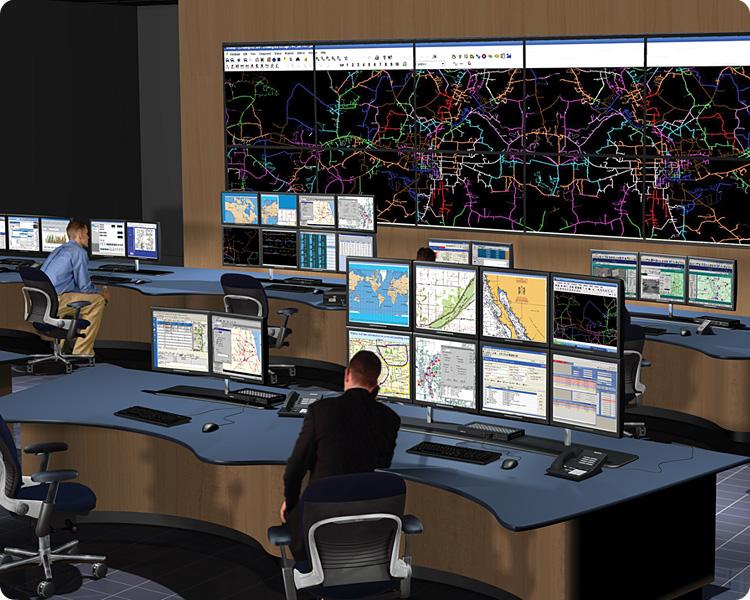 Mining Global (@MiningGlobal) Jason Nitz of @Newmont Mining discusses the potential Big Data presents to the mining industry. Good piece on an industry you usually do not see talked about in this context. " ... There has been a similar explosion of ‘big data’ in mining, albeit slightly behind that of the Internet revolution, but nonetheless, the amount of data now available from mining equipment is staggering. In fact, there is so much data available people often don’t know which way to turn. ... ".
As described this work is similar work that we did to optimize complex plant operations in other industries. These are usual 'local' supply chain interactions, on a plant floor, or in an operations yard. Doing this well can save millions of dollars in costs, and increase throughput.
And how they are dealing with real time big data by effectively visualizing it in operations centers. At the same time the results of analytics can be applied and displayed. This kind of visualization was also an area we spent much time on.
And how they are dealing with real time big data by effectively visualizing it in operations centers. At the same time the results of analytics can be applied and displayed. This kind of visualization was also an area we spent much time on.
Home of the Future at CES
In Engadget: A connected home wrap up from last weeks CES. Not very impressive. Lots of pieces there, as we have seen over a number years, since we built our own in 2000. But effectively and safely connecting them is still haphazard.
Sunday, January 11, 2015
Concept Maps Delivering Cognitive Systems
I just posted a note in the Linkedin Group Cognitive Systems Institute: Using Concept Maps to Deliver Cognitive System Design: One of the methods we used to develop, understand, deliver and maintain high level knowledge representation for cognitive systems were concept maps ... This relates to the availability of CMapTools now on tablet technology. A featured we would have liked at the time.
Wearable would have also been very usable, say glasses that would have displayed a blueprint of a machine to be repaired as you received expert device on how to do diagnostic tests. And data about where failures had been recorded, or were predicted on this machine. An example of augmenting and scaling expertise delivery.
Wearable would have also been very usable, say glasses that would have displayed a blueprint of a machine to be repaired as you received expert device on how to do diagnostic tests. And data about where failures had been recorded, or were predicted on this machine. An example of augmenting and scaling expertise delivery.
Disruption of Industry Forces
In GigaOM: Well put overview of a survey. Some expected things, others now. I mostly agree with their statement that: " ... It’s hard to disagree that new technologies can re-arrange industries and create new markets. But the general consensus as expressed in the survey results might be missing out on the combinatorial power of those plus connected users plus what might be thought of as the new “super platforms.” ... "
How can CPG Adapt
In CPG Matters, new and interesting updates on the onrush of digital enterprise and implications for CPG:
6 ways CPG companies can adapt
The consumer packaged goods landscape has become complex, and having channel and digital strategies is essential, writes Strategy& partner Steffen Lauster. Success will include "the development of more effective product portfolios, the use of cutting-edge merchandising, and the flexibility to work with different retail formats, particularly online distributors. In short, manufacturers must find new ways to grow beyond the grocery channel," he writes ... "
Groups Promoting the Internet of Things
In the CACM: In particular the issue of evolving standards and protocols is becoming important. A good overview of the groups and participants forming.
Saturday, January 10, 2015
Longer Container Ships
A supply chain background piece. With lots of instructive pictures and data. How container ships are changing world supply chains. And about the largest container ship in the world. Larger is better, as evidenced by our own detailed studies of trucks on highways. But understanding physical and regulatory constraints, now and in the future, is also important. Via MJ Perry.
Cognitive and Neuromorphic Computing
 On the reasons for the re-emergence of AI as cognitive computing. In the Economist:
" ... Cognitive computing is AI redux. Researchers took the successful bits of AI, such as machine learning, natural language processing and reasoning algorithms, and turned them into something useful.
“Cognitive computing is starting to take off because we are having this confluence of the maturity of the technology, the evolution of computing power, and the ability to understand things like language, which is coming together to make this more of a reality now,” says Mr Gordon.
But the phenomenon is not purely driven by technological advances; there is also a pressing need for systems that can organise and make sense of big data. It’s no secret that digital data is growing at a clip—about 3 exabytes of data every day. With the Internet of things – where machines talk to other machines over the Internet – predicted to intensify that growth, this need is only going to become more acute. .... "
Abductive Reasoning, Sensemaking and Design
Via Brian Moon or Perigean Technologies, who writes on making sense of knowledge via methods like concept mapping. Good piece at link.
Abductive Thinking and Sensemaking: The Drivers of Design Synthesis by Jon Kolko
Overview: Making Sense of Chaos
Designers, as well as those who research and describe the process of design, continually describe design as a way of organizing complexity or finding clarity in chaos. Jeff Veen, founder of Adaptive Path, has noted that "Good designers can create normalcy out of chaos"
The Importance of Synthesis during the Process of Design" IDSA 2007 Educational Conference Proceedings (San Francisco: IDSA), 2007. Jim Wicks, Vice President and Director of Motorola's Consumer Experience Design group explains that "design is always about synthesis—synthesis of market needs, technology trends, and business needs."[2] During synthesis, designers attempt "to organize, manipulate, prune, and filter gathered data into a cohesive structure for information building."[3] Synthesis reveals a cohesion and sense of continuity; synthesis indicates a push towards organization, reduction, and clarity. .... "
Cmap Tools now Available for iPad
 Cmap is the best known general concept mapping tool, which we tested in the enterprise. Previously noted about this in test last year. See previous posts here about concept mapping.
" ... CmapTools for iPad now available for download at the Apple App Store. Give us a great review! https://itunes.apple.com/us/app/cmaptools/id927987108?mt=8
Alberto J. Cañas, Associate Director at IHMC, More details on the App at: http://cmap.ihmc.us/cmaptools-for-ipad/
CmapTools itunes.apple.com
Read reviews, get customer ratings, see screenshots, and learn more about CmapTools on the App Store. Download CmapTools and enjoy it on your iPhone, iPad, and iPod touch. ... "
Watson Meets Machine Learning
In KDNuggets: An overview of the Watson ecosystem from a recent presentation. Examples in healthcare and education.
Friday, January 09, 2015
Sports Tactics and Conversion Rates
In Conversioner: Nicely done short piece that brings together a number of data and behavioral process methods to address selling. " ... Surprisingly, competitive sports are much like conversion optimization. Whether you’re playing a sport or optimizing a web-site, you want to be the best you can be in order to increase conversion rate. While conversions might be points or goals in sports, they are purchases and downloads in conversion optimization. Here are some insights that we can gain from competitive sports and apply to conversion optimization. ... "
Criticizing Neuromarketing
I have been connected to two startups in the neuromarketing domain. Is the hype fading for non conscious interaction applications of the neural kind? Have seen large enterprises making investments. Interesting research results, but not definitive. A critical overview of the status in CWorld.
Augmented Reality Projector Interfaces
In Computing Now An example of new approaches to collaborative interface. Haptic (touch) included.
Spatial User Interfaces for Large-Scale Projector-Based Augmented Reality
Michael R. Marner, University of South Australia
Ross T. Smith, University of South Australia
James A. Walsh, University of South Australia
Bruce H. Thomas, University of South Australia
Spatial augmented reality environments deal with nonplanar projection surfaces, physical objects that provide natural passive haptic feedback, and systems that naturally support collaboration between users. .... Full article pdf
Thursday, January 08, 2015
Third Party Sellers Set Record
In Retailwire: Have been involved with a third party seller on Amazon for some time. The process and dynamics are interesting to watch. The data use claim is interesting, had not heard that:
" ... Despite concerns raised about Amazon possibly using data from third-party sellers on its Marketplace to benefit itself at the expense of those smaller companies, new numbers from the e-tailing giant show many of the merchants on its site are doing quite well.
According to Amazon, third-party sellers set a record selling more than two billion items worldwide last year. Today, there are two million sellers on Amazon that account for over 40 percent of the total units sold on the site. ... "
Forbes on Watson Analytics
An overview of the idea. Continuing to follow. Have mentioned I think there are some useful integrated visualizations here that are quite good. Still unclear how much these analytical approaches are completely general, early impressions are that they were adapted for particular industries. I like the idea that changing data could be consistently analysed with the same methods. This might provide different kinds of insight than human analysts could provide.
Hidden Costs of Manual Data Collection
The RFCode site blog was just brought to my attention. My investigation into data costs and data asset value led me to this. They have an Infographic on the cost of manual data collection. Also need information about the rsk of data, would like to see all data tagged with metadata that indicated cost, value (in context) and risk.
Classic Computer Chip at age 40: The 8080
In CWorld: I did some direct programming on this chip, so the milestone is historic for me. Where is the microprocessor going? Good background and directional innovations.
Security Concerns of Internet of Things Device Data
In CWorld: FTC describes the concerns of how such data can be used against you. " ... Will 2015 be the year when smart home hacking is a real threat? At CES 2015, the FTC chairwoman mentioned the security warning during her speech; she suggested IoT risks to privacy such as smart TV viewing habits and other data from smart yet insecure devices that can potentially have unexpected uses to create a dystopian future. ,,, "
FuturICT World Model
Brought to my attention:
The goal of FuturICT is to understand and manage complex, global, socially interactive systems, with a focus on sustainability and resilience. ... " Policy: FuturICT will build a Living Earth Platform, a simulation, visualization and participation platform to support decision-making of policy-makers, business people and citizens. ... "
A CERN for social models?
Mapping Your Knowledge Assets
In the HBR. An idea we attempted to do in more detail, with partial success. I like the idea of using a simpler template, rather than a full blown concept model. Then building detail downward, as needed, using the filter of 'mission critical' and their definitions are useful. I would then like these same structures mapped to related data assets, and estimating their value.
" ... Map Your Knowledge Assets
The first step is to put boundaries around what you’re trying to do. Even if you tried to collect and inventory all the knowledge floating around your company—the classic knowledge-management approach—you wouldn’t get anything useful from the exercise (and you’d suffer badly from cognitive overload). Our goal is to help you understand which knowledge assets—alone or in new combinations—are key to your future growth. We would bet heavily that if your company has a knowledge-management system, it doesn’t adequately parse out your mission-critical knowledge. ... "
Wednesday, January 07, 2015
Retrain Your Brain: Think like a Freak
 In Knowledge@Wharton " ... Are you sure it is a bad idea to quit a job? In Think Like a Freak, Stephen J. Dubner and Steven D. Levitt (of Freakonomics fame) argue that we are often overly confident about what we think we know, and they recommend a way to think differently to solve problems and make decisions.
Wharton management professor Adam M. Grant recently interviewed Dubner about his new book when he visited campus as a guest lecturer in the Authors@Wharton series. In this interview, Dubner discusses why we should say, “I don’t know” much more often than we do. ... "
I largely agree, as long as we follow up to find out or connect with the best resource to 'know'. Better yet, if we have the process, or algorithm, or analytics ready, and then get the data to derive the best answer.
Think Like a Freak site.
MOOCs and Hype
In Knowledge@Wharton: " ... Today, though the hype has died down, the world’s largest provider of MOOCs – Coursera – keeps on innovating and developing its online platform to serve millions of learners. Coursera co-founder Daphne Koller, whom Knowledge@Wharton interviewed in November 2012, returned to campus recently to speak about her progress since launching her company 2.5 years ago, and she gives her predictions for what the MOOC landscape will look like in the future. In her interview, Koller also provides an update on how Coursera is staying afloat even though the vast majority of students don’t pay a penny for their education. ... "
Amazon in the Bathroom
In Retailwire: The next frontier, the bathroom, in all its functionality. In the Smart home we examined many aspects of this, most notably the testing of 'smart mirrors' for both augmentation using approaches like virtual makeovers, and providing information interaction during visits.
" ... Identifying and capitalizing on previously unexplored consumer behaviors seems to be a go-to strategy for Amazon these days, as the company rolls out new offering after new offering to see what sticks. With its Amazon Lockers, its one-hour delivery and its talking in-house personal shopper, Amazon Echo, to name a few, Amazon is attempting to further engrain the company into peoples' habits and daily schedules.
Amazon now appears to be going where few other businesses have ventured. In December, the company revealed plans to address a consumer behavior that, while uncomfortable for some to acknowledge, is an unavoidable reality of the information age. ... "
Overfitting in Analytics
Very good piece in KDNuggets on overfitting: A Technical concern for any kind of analytics, but increasingly important as Big Data is being explored. Although this is a technical piece, even novice practitioners need to understand this. Essential thoughts, good examples.
Google Video Ads and Viewability
In Adage: A pointer to the fact that Google is providing more services to indicate how well ads on Youtube are playing. I recall hearing of another example where they were tracking Ad play and providing new kinds of analytics, such as viewablility, linked to user activity. This will allow further tuning of video messages. Consider too, that video is a new kind of unstructured, interactive and streaming data presenting a challenge to Big Data Analytics.
Kimberly-Clark and Advanced Technologies
Piece in Mediapost about how CPG companies are looking at advanced technologies. Some curious examples.
" ... Many brand marketers make the annual pilgrimage to CES in search of the next big thing. On Monday, a team from CPG giant Kimberly-Clark and its agency Mindshare saw what could well be the next smallest thing -- a promising new technology that operates at the molecular level, but has the potential to alter the entire world of consumer marketing.
“This is a relatively medium fat cheese,” Damian Goldring told the K-C team watching as he demonstrated SCiO, a handheld sensor capable of analyzing any form of physical matter simply by scanning it -- in this case, a platter of cheeses he had just purchased at a local supermarket here. ... "
Gamifying Business Travel
From Amex: Pointers to some work that American Experss has done, mention of using gamification to reduce costs. Have downloaded but not read the results.
Tuesday, January 06, 2015
Graph Analytics and Gephi
 In Forbes, an article on Graph Analytics. Good overview, it will become an important Bigdata concept, but no mention of Gephi, an Open Graph Viz Platform. Its free for experimentation. It is not the same thing that Forbes describes, but is an excellent starting point. A means to produce and visualize very complex, data based graph structures. Have used it for supply chain and physical system problems and mentioned it a number of times in this blog.
(Brought to my attention by @KirkDBorne)
Twitter and this Blog
Many of the posts here are supported by tweets, my address on twitter is @FranzD. In addition I will often retweet supporting and related information on topics here by others in Twitter. Google + is also used, but much less commonly. Posts here are also featured in the Forums of the ACM. Let me know if you want additional cross posting of information in this or other media.
Hot Innovation Tools
Innovation Excellence on hot innovation tools. This is more about innovation processes rather than specific tools. Worth a look.
Grocery Attracting Millennials
In MediaPost:
Creativity, engagement will help retailers attract millennials
" ... Retailers should tap creativity and engagement to attract millennial shoppers, who will account for 80 million consumers and boast more than $200 billion in spending power by 2017, according to Advertising Age. Retailers should allow millennials to participate in marketing campaigns, offer solutions for on-the-go healthy meals and promote in-store events and other amenities to shape a unique customer experience, according to a report from Barkely. ... "
Innovation Capacity and Smart Service Systems
Building Innovation Capacity Using Smart Service Systems
NSF proposals
Smart Service Systems—Unrestricted as to domain knowledge and application areas. This topic has been further refined and defined, including a stronger emphasis on service systems in the NSF context, which first and foremost includes the signature characteristic of being human-centered as well as smart. Additionally, the emphasis has been shifted from the goal of enabling a smart service system to a focus on integrating a technology or technologies into a specified human-centered smart service system with the potential to achieve transformational change in an existing service system or to spur an entirely new service system. ... "
Monday, January 05, 2015
Samsung and the Smart Home
Continue to follow Smart Home directions. At CES Samsung promotes its Tizen OS. I have said before I am unimpressed with Samsung software in the Smart TV realm. Here I will see. " ... Samsung Hopes Software Will Make It the Google of Smart Homes ... Company Wants to Own More of the Experience With Tizen Operating System ... "
More on the Tizen Operating System.
More on the Tizen Operating System.
Digital Shopper Marketing Magazine
From the Path to Purchase Institute. Contains the 2015 trends report for Shopper Marketing. Good resource. See also their Linkedin Group.
Couponing and Retailing
Some of the earliest data analyses I did in CPG were evaluating the efficacy of coupons. The debate continues about their value, now in many different media. In Retailwire.
Protective Swarmware
As expected we are seeing the application of swarms for military and defense applications. We saw the application suggested a long time ago. Expect there to be many more such examples. See the link below for much more
Data Architecture and Big Data
Seeking more on this topic. Resources?
An overview of the challenges.
" ... The big data onslaught will continue for the foreseeable future, and is only going to grow more intense from exponential data growth. But here’s the challenge: the human mind tends to think linearly—we simply don’t know how to plan for, much less capitalize on this exponential data growth. As such, the business, information, application and systems infrastructures—at most companies—aren’t equipped to cope with, much less harness the coming big data flood.
Want to be prepared? It’s important to take a fresh look at your existing IT architecture—and make sure that your data management, data processing, development tools, integration and analytic systems are up to snuff. And whatever your future plans are, consider doubling down on them. ..."
Sunday, January 04, 2015
The New Investor Rush to AI
 In the Financial Times (May require registration) A look at investment in AI style systems today. Excellent comparative numbers. Emphasizing the largest investments. I was involved with the last wave, in the late 1980s which featured companies like Intellicorp and Teknowledge. My enterprise took a substantial equity position in the latter, with the expectation that it would flourish as an expert system tool provider throughout multiple industries, as well a extending and augmenting the efficient use of expertise within the enterprise.
Although there were considerable internal successes, it was more difficult to find the right balance of complexity and focus. Simpler systems could be replaced by spreadsheets, more difficult ones were hard to construct and ultimately maintain. It was also hard to interconnect multiple AI tasks to form coherent jobs. Some few systems were utilized for decades and saved the enterprise millions. Much to learn from those experiences. Will the new wave extend its reach beyond its grasp? Talk to me.
Illusion Coatings
Pretty scary ideas that have all sorts of implications. But I suggest that this will also lead to all sorts of counter measures as well.
Oort Shop
Brought to my attention. Quite a claim.
Make Your World Smarter
" ... Oort is a technology based upon intelligent connected devices that lets you control your whole living environment with a single app. ... "
Make Your World Smarter
" ... Oort is a technology based upon intelligent connected devices that lets you control your whole living environment with a single app. ... "
Unilever and the Internet of Things
A small part of my role in the enterprise was understanding and reporting on how arch rival Unilever used data and technology. We looked at how related methods, like RFID, were used. So this article was of interest as multiple industries awake to the implications of IoT.
Saturday, January 03, 2015
Watson Business Analytics
I happened to see a new ad about IBM Watson Analytics this evening on sports TV, very well done 15 second spot. I was unable to find that ad, though I it will likely soon be online. There is a short Youtube introduction out there that is a few months old that is still worth a look. Especially highlighting the integrated data visualization and analytics process. Becoming more impressed as I have re started my investigation of the system. Beta available.
And a related recent panel discussion. Which includes several of my collaborators.
And a storybook about its use in a number of domains.
Also mention in the talk that future versions of the tool will include storybook and infographic features to convert the analytics results into more visual forms. Currently these capabilities are indicated as greyed out in the Beta.
NASA Printing Houses on the Moon
In CACM: Once you get a 'printer' there, and have the necessary materials, it can be done.
" ... NASA envisions 3D printers serving as miniature on-site manufacturing plants creating replacement parts and tools, but the upcoming experiment is also an early test of a far grander idea. NASA and the European Space Agency (ESA) are both exploring the possibility of printing entire buildings on the Moon, or even on Mars.
Building habitats on the Moon using lunar soil as the raw material may prove less expensive than shipping ready-made structures from Earth. "You must learn to apply the local material, and the easiest approach is to use 3D printing," says Amit Bandyopadhyay, a Washington State University biomedical engineer. ... "
ChoreMonster Lauded by Parents Magazine
In Bizjournals, about colleague Chris Bergman's startup ChoreMonster. Congratulations Chris!
' ... Cincinnati-made app lauded by Parents Magazine on 'Today' show
A Cincinnati-made app was touted by Parents Magazine as one of the must-haves for 2015 in a segment on the "Today" show this morning. ...
Parents Magazine editor in chief Dana Points selected Cincinnati-made ChoreMonster as one of six best apps for families she presented on the national morning program. ... '
See some of my previous writing on this Startup, link below. A good example of gamification, here turning family chores into a game.
Geeting Started with Hadoop
Have had many people ask me, what is this Hadoop-Spark thing? How does one get started? Here is how you can get started in 10 minutes (they say). From the always interesting Data Science Central. Note this is for the already technically adept. Descriptions and motivation are elsewhere. Click the Hadoop tag here for more.
Experiential Products
Experience and material goods.
" ... Past studies have found that people get more enjoyment and satisfaction from the purchase of experiential adventures or events — eating out, going to a concert, traveling, etc. — than from material purchases such as apparel or jewelry. But a new study finds a host of experiential products can provide the same feeling of well-being as life experiences.
The study from the University of Michigan and San Francisco State University examined consumers' reactions to "experiential" products — purchases that combine material items and life experiences. These were defined as purchases people make "to have in order to do" and include video games, sports equipment, books or musical instruments. ... "
Friday, January 02, 2015
Value of Positive Workplace Culture
In FutureofCIO: Value of positive Culture. " ... Organizations large or small are transforming from industrial silos to more holistic digital business, but a positive workplace culture is not less important, but more critical, because culture as a collective mind and habit, is the competency to decide business’s long term success. But what’s the correlation between positive workplace and policy, could culture be the very reason for the proliferation of policies or, can a positive workplace culture reduce the number of policies required to manage employees? ... "
Online Grocery Sales Disrupting In-Store
Watching Amazon closely.
Report: Next 3 years to see major growth in online grocery sales
E-commerce accounts for less than 1% of the food and beverage industry's $600 billion in sales due in part to complex logistics and a struggle to guarantee freshness, according to a report from BI Intelligence. But with factors such as the rise of concierge and subscription shopping options, online food and beverage sales are expected to grow at a compound annual rate of 21.1%, reaching $18 billion by 2018, according to the report ... "
How to Find Needed Market Research Data
The data you need to make your company work efficiently is often hard to find. A former colleague has a startup that addresses this. It is being used by P&G. Note how this is also related to all kinds of data assets.
Can’t find your market research data? This startup can help
That Diet Coke in your hand didn’t invent itself. It’s the result of years of focus groups, surveys and data crunching—more commonly known as market research. Companies that produce consumer packaged goods (CPGs) spend millions each year on market research and it’s both a blessing and a curse. It’s a boon to planning new products and tweaking existing ones but when it comes to finding individual pieces of information, that’s where the cursing comes in. A startup out of Chicago called KnowledgeHound thinks it has the answer. ....
As KnowledgeHound CEO Kristi Zuhlke put it, companies spend all that cash on studies, then “stash the results on a hard drive, and promptly experience ‘corporate amnesia’.” ....
Zuhlke experienced this firsthand in her time at Procter & Gamble working in consumer insights. “As soon as we’d get the info in, a month later we’d forget we had it. There wasn’t a central, easily navigated place to access.” Building on her experiences in the consumer packaged goods industry, Zuhlke founded KnowledgeHound in 2012 and went from paper to product in four months. Her first customer? Procter & Gamble. ..... "
See also a video visualization.
TED Talks on Memory
An hour long, multiple episode talk on the topic of human memory. " ... Memory Games ... Memory is malleable, dynamic and elusive. In this hour, TED speakers discuss how a nimble memory can improve your life, and how a frail one might ruin someone else's. ... "
Thursday, January 01, 2015
IKEA Hacks
Hacking IKEA products. In Gizmodo. Fun but not very exciting. Meanwhile IKEA is legally threatening the site because the site has advertising. Does not match the online viral customer loyalty model.
Blog Statistics
Around new year I review some blog statistics. Last December was a new record for monthly blog visits, a total of 28,542.
On a Data Analytics Champion
In CIO: Suggesting that every organization needs a data analytics champion. I agree. But its success depends strongly on how you enable capabilities and reward results. It also needs sustained funding and ongoing links to key, value driven vendors. One approach would be to start with a champion and then evolve to be a part of the CIO's role. The CIO needs to be educated about capabilities, and the champion about needs. With a strong connection to the CEO and Board with regard to where and when analytics can be effectively applied. I have seen this done, though not as effectively as it could be. The piece has some good thoughts.
Interactive Intent Modeling
 A natural interaction of user and their behavior. Note a number of recent posts in a related topic that uses personality modeling. Here a hybrid approach. Currently examining this with a related tech.
In the CACM:
Interactive Intent Modeling: Information Discovery Beyond Search
Combining intent modeling and visual user interfaces can help users discover novel information and dramatically improve their information-exploration performance. .. "
" ... We introduce interactive intent modeling, an approach promoting resourceful interaction between humans and IR systems to enable information discovery that goes beyond search. It addresses the vocabulary mismatch problem by giving users potential intents to explore, visualizing them as directions in the information space around the user's present position, and allowing interaction to improve estimates of the user's search intents. ... "
Technical Experience Details
Franz A. Dill
Substantial Consulting Considered in 2015
Data Decision Scientist. In particular in application areas that use or combine data analytics, decision processes and cognitive interaction. Experienced in designing,evaluating and delivering systems in the enterprise to executives and decision makers in a Fortune100 company known for Analytics excellence. Experience with R, SAS, SPSS, Splunk, System Modeler, BPM systems, Tableau, Spotfire, Optimization Mathematics (CPlex). Lisp, Expert Systems ... Managed the design, construction and delivery of dozens of systems that led to hundreds of millions of dollars in confirmed value. A sought out resource for the solution of the most wicked problems. Consulting with IBM on the application of Watson based Advisory Systems. A Writer, Explainer, Solver, Innovator. Multiple University board and advisory connections. More in links below.
Franz A. Dill, Retired Procter & Gamble
PKL Knowledge Partners LLC - Data Decision Scientist
Cognitive Systems Institute
Advanced Analytics Consulting
Blog: http://eponymouspickle.blogspot.com
Short Bio: http://tinyurl.com/pabggc2
Phone: (513) 405 7387
Twitter: @FranzD
Franzdill@gmail.com
Cincinnati, Ohio Area
Wednesday, December 31, 2014
Judea Pearl Keynote Address
Keynote Lecture at the 2014 BayesiaLab User Conference
September 23, 2014, Los Angeles, California
From Bayesian Networks to Causal and Counterfactual Reasoning a talk by Judea Pearl.
"... The development of Bayesian Networks, so people tell me, marked a turning point in the way uncertainty is handled in computer systems. For me, this development was a stepping stone towards a more profound transition, from reasoning about beliefs to reasoning about causal and counterfactual relationships. In this talk, I will survey the milestones of this journey, and summarize the practical and conceptual problems that we can solve today and could not address two decades ago. ... "
Registration required.
Chief Analytics Officer
The Ultimate Big Data job? I don't know many of these positions around. The article does a good job in describing what they could be. Also a look at the differences between Chief Data and Chief Analytics Officer, but there is considerable overlap today in Big Data. And how these roles might exist alongside the CIO.
Key would be a good interaction with corporate decision processes at a strategic and operational level. Innovation in fast moving technologies in context also needs to be considered. And in a services world an understanding of technology that is available and how it is evolving.
If anyone wants to talk to me about developing this role, contact me.
Open Source Code not always Safe
In CWorld: Very good points made here about the use of software libraries. Ran into exactly this problem a little while ago. Just because everyone can see the code does not mean they have incentive to carefully check it. Good caution.
Choose the Right Innovation Method
In the HBR:
" ... In the industries plagued by the most uncertainty, how do companies hold on to their ability to innovate? And how do they achieve, and keep, an innovation premium in the market?
We found that managers who help their firms create and maintain an innovation premium use a different set of tools than their more traditional counterparts — tools honed in start-ups and specifically designed to manage uncertainty. .... "
Computing Breakthroughs in AI
Technology Review outlines technology breakthroughs in artificial intelligence. 2014 has been a very big year. We are starting to see real applications in practice, though many are still avoiding the term AI itself. It has been interesting watching this second wave. Capabilities and expectations have risen.
Donald Knuth on the History of Computing
In CACM: Stanford Prof Donald Knuth is a hero to many of us who grew up during the real emergence of computing, to the point that most every person uses it personally every day. He spent much time systematizing it as a science Are we now dumbing the science down? Yes, I say, but that has also brought it to many more people as sets of engineering principles. A direction that sounds perilous. Call it accessibility. Talk and commentary. (Updated)
Supermarkets, Customers and Big Data
In Information Week: Looking at how well companies understand their customers.
" ... It's no coincidence that supermarkets and banks, which have not just the technology but the expertise to utilize their databases effectively, scored the highest when customers were asked how well these companies know them.
In poorly rated sectors, too many companies fail to access customer data, even when the technology to do so is available, and don't make good use of the information they do have. In many cases, that's because they rely too much on technology. In a data-led, digitally connected world, companies that lack the expertise to efficiently reach customers either need to get the right people or outsource this function. ... "
Stream Computing
Systems, devices, and people now generate vast streams of data. How do we understand that data in real time?
" ... Remember the blackout during Super Bowl XLVII in February 2013? Nabisco certainly does. The company that makes Oreo cookies made history “winning the super bowl blackout” with its tweet, “You can still dunk in the dark.” That tweet resulted in tens of thousands of likes and retweets in real time—not bad considering that most advertisers pay approximately USD4 million/commercial slot during this event. Visit the Big Data & Analytics Hub to read the blog posting, “Reflections and Predictions for Stream Computing in 2015,” to see what Kimberly Madia, worldwide product marketing manager, InfoSphere Streams, at IBM, has to say about the impact that real-time data can have in today’s world. ... "
" ... Remember the blackout during Super Bowl XLVII in February 2013? Nabisco certainly does. The company that makes Oreo cookies made history “winning the super bowl blackout” with its tweet, “You can still dunk in the dark.” That tweet resulted in tens of thousands of likes and retweets in real time—not bad considering that most advertisers pay approximately USD4 million/commercial slot during this event. Visit the Big Data & Analytics Hub to read the blog posting, “Reflections and Predictions for Stream Computing in 2015,” to see what Kimberly Madia, worldwide product marketing manager, InfoSphere Streams, at IBM, has to say about the impact that real-time data can have in today’s world. ... "
Tuesday, December 30, 2014
Hyundai's Exobaby
 A virally spreading video a car Ad about a baby covered by a exoskin by Hyundai. This conceptual video demonstrates robotic assistance capabilities for humans. Most of the time these ideas are show with military applications. The baby creates a softer, human and domestic application of some of the same ideas. Protect, enable and augment the wearer. With both a physical exoskin and software.
From the Tubingen Machine Learning Summer School
A little late, but quite a rich set of resources, slides and quality video.
The Machine Learning Summer School
at the Max Planck Institute for Intelligent Systems, Tübingen, Germany
Via Kirk Borne.
The Machine Learning Summer School
at the Max Planck Institute for Intelligent Systems, Tübingen, Germany
Via Kirk Borne.
Computing What Looks Good and Fits
Have been involved in virtual makeover projects in retail since the 80s. And have seen attempts to take this beyond just how things look, to see if we can understand if a piece of clothing will fit via some virtual model. A look at a number of Apps and applications that do this. At very least reducing the expensive process of returns. And improving the level of consumer satisfaction.
In CACM: ' ... "Creating a digital relationship with a customer ... could theoretically influence a large share of their consumer spending." .... Technically, all of that is possible today, he says, but businesses have to figure out how to get there. "It will be a mad race to that point because there is so much to be won—or lost—in this race, creating a digital relationship with a customer that could theoretically influence a large share of their consumer spending." ... '
In CACM: ' ... "Creating a digital relationship with a customer ... could theoretically influence a large share of their consumer spending." .... Technically, all of that is possible today, he says, but businesses have to figure out how to get there. "It will be a mad race to that point because there is so much to be won—or lost—in this race, creating a digital relationship with a customer that could theoretically influence a large share of their consumer spending." ... '
Advances in Domestic Robotics
Will this be the era of robots beyond the Roomba? Cooperating with both us and our smart homes? Still have not seen real evidence. In the Daily Mail.
Changes in the Nature of Design
In Radar: Have always worked on the periphery of design, adding analytics as it was requested, but usually after the product development fact. It has always been been talked how we could link the two closely, but rarely done. Now we can be there.
" ... Design is entering its golden age. Now, like never before, the value of the discipline is recognized. This recognition is both a welcome change and a challenge for designers as they move to designing for networked systems. John Follett, editor of Designing for Emerging Technologies recently sat down with Matt Nish-Lapidus, partner and design director at Normative Design, who contributed to the book. Nish-Lapidus discusses the changing role of design and designers in emerging technology.
As Nish-Lapidus describes, we’re witnessing the evolution of product development from one crafts-person, one customer; to a one crafts-person, many customers; to a one craft-person, one product that many people will customize. He explains how the crafted object and the nature of design has changed, beginning with the pre-industrial era: ... "
Monday, December 29, 2014
The Banburismus Process and Joan Clarke
 After seeing and reviewing the movie about Alan Turing movie: The Imitation Game, I took my research obsession to looking further at Joan Elisabeth Clarke, Turings sometime fiance, and colleague at Bletchley Park during WWII. She was also an award winning Cambridge mathematician. Portrayed in the movie by actress Keira Knightley.
In her WP article it was mentioned that she was a cryptanalyst and a practitioner of what was called Banburismus, a method used to simplify code breaking. Expanded by Turing and possibly improved by Clarke and other members of the team. Some of this work is still considered confidential.
There is a lengthy article about the Banburismus process in the WP. A fascinating look at how a polyalphabetic substitution cypher based on the wheels of the Enigma machine could be simplified with a hand and visualizing algorithm. The article even gives several examples. Leads to an appreciation of how difficult this method was without programmable computing. Also an early look at text analytics.
Further, it is mentioned that this was a development of the 'clock method', developed by Polish cryptanalyst Jerzy Rozycki. Pointing to the key work done, barely mentioned in the movie, by the Polish group.
Demise of the IT Department
In BaselineMag: My view: CIOs are moving from technology based solutions to services. Demand will still continue to rise, but results will be more carefully positioned and measured. I believe that this will mean that the solutions proposed will have to be more closely connected to business process.
Apple and IBM Create Foundation Apps
These look mostly like mega-tasks in the form of Apps. Mostly data based. Would like to see a selection of them that are more strongly cognitive powered. Have we considered how they might be linked together as tasks that form a job? Or designed as microservices? Great start to make us think the architectural issues .
From CWorld:
" ... App and business sector choices reveal strategy of 'foundational' apps that can be customized for customers, say experts
Apple and IBM last week kicked off their five-month-old partnership with an "impressive" 10-pack of focused mobile business apps catering to sectors ranging from financial to law enforcement. " ... '
Apple and IBM Want to Energize Enterprise Software
In Forbes: This relates to the set of sample Apps written to address specific enterprise tasks.
" ... This partnership has the potential to both energize the software that IBM sells to its customers and the sales of Apple iPads that run the apps, but also the entire enterprise software market. If the branding takes hold, corporate customers will be asking their software suppliers to “make it like IBM ... ”
What they really will be saying, of course, is “make it like Apple,” but the Cupertino brand has not made inroads in the C-suite like it has in the psyche’s of consumers. Executives and their minions are consumers too, so Apple’s products are well-represented in the enterprise, but not yet well-supported by IT departments. .. "
Via Walter Riker.
CDC Seeks New Data Toolkit
Seeking a data toolkit:
" ... WHAT: A request for information on data analysis and visualization by the Centers for Disease Control and Prevention ...
A new project called Data Collation and Integration for Public Health Event Responses (DCIPHER) is looking to change all that. According to the RFI, the CDC needs "a single electronic platform that integrates, manages, analyzes, visualizes, reports on and shares key surveillance, epidemiologic, laboratory, and environmental findings during public health investigations and responses." The Ebola outbreak isn't mentioned in the RFI, but it does come up in answers to vendor questions about how the system would be used to gather information on individual cases and events that fall outside of routine surveillance activities. ... "
Subscribe to:
Posts (Atom)