


Even contributing to some outages this weekend in Europe. Will voice be more important than we think? The integration of 'skills' to curate selection in new ways?
Amazon Says Alexa Voice Shopping Tripled During 2018 Holiday Season Via Fortune,
Shoppers are increasingly using their voices to buy products online.
Amazon on Wednesday said that the number of voice-activated orders placed via its virtual personal assistant Alexa were three times greater during the 2018 holiday season than they were in the last year.
Meanwhile, Alexa was also called on “hundreds of thousands” of times to help folks find cocktail recipes: eggnog and Moscow Mules topped the list of most-requested drinks during the holidays.
The findings were part of Amazon’s (AMZN, +3.25%) announcement on Wednesday that its customers ordered more items worldwide this year than ever before. In the U.S. alone, Amazon shipped more than one billion products for free through its Amazon Prime subscription service. Amazon retail partners that sell products through its online marketplace accounted for more than half of the items sold through the holidays. .... "
Showing posts with label curation. Show all posts
Showing posts with label curation. Show all posts
Wednesday, December 26, 2018

Wednesday, October 17, 2018
On Amazon Scout for Product Discovery
Did lots of work with systems that would search for items in stores. Here the next step. Is this search in a virtual space? And what other kinds of curation of the search is also at play?
Is Amazon on the right path to improved product discovery with Scout?
by Ken Lonyai in Retailwire
Jeff Bezos has said, “To invent you have to experiment and if you know in advance that it’s going to work, it’s not an experiment.” By that definition, Amazon Scout is an enormous experiment.
Scout (amazon.com/scout) is a new visual search engine within Amazon. It’s aimed at categories where visual appeal is a big part of shoppers’ selection criteria, so furniture, women’s shoes and lighting are early subjects. Shoppers choose a product subcategory and then give a thumbs up or down to each image. It seems like a simple and intuitive method of culling preferred items from a list of possibilities, but without a rework, I believe it will be a failed experiment.
The system utilizes machine learning to make replacements to the displayed assortment based on similarities or contrasts to the user-ranked item. The more rankings, the more tuned the selection until, in theory, the product choices displayed are largely purchase candidate items that meet the shopper’s desires. .... "
Is Amazon on the right path to improved product discovery with Scout?
by Ken Lonyai in Retailwire
Jeff Bezos has said, “To invent you have to experiment and if you know in advance that it’s going to work, it’s not an experiment.” By that definition, Amazon Scout is an enormous experiment.
Scout (amazon.com/scout) is a new visual search engine within Amazon. It’s aimed at categories where visual appeal is a big part of shoppers’ selection criteria, so furniture, women’s shoes and lighting are early subjects. Shoppers choose a product subcategory and then give a thumbs up or down to each image. It seems like a simple and intuitive method of culling preferred items from a list of possibilities, but without a rework, I believe it will be a failed experiment.
The system utilizes machine learning to make replacements to the displayed assortment based on similarities or contrasts to the user-ranked item. The more rankings, the more tuned the selection until, in theory, the product choices displayed are largely purchase candidate items that meet the shopper’s desires. .... "
Monday, October 01, 2018
Bots Changing the Way we Buy
Thoughts on bots and buying. Curation comes up. It also works with things as 'simple' as search. You freely initiated it, but it also has curation in mind.
How Will AI Bots Change the Way We Buy Consumer Products? I Shop, You Buy? By Kristina Rogers in Consumergoods
Today I can go and buy toothpaste or go and shop for some. Whichever way I describe it, the activity is the same. Maybe the only difference would be whether I get my toothpaste online or in the “real world.” But in the near future, I think the words buying and shopping will begin to describe very different activities.
‘Buying’ won’t take up much of our time or attention. Today, I can tell a device on my kitchen counter to add toothpaste to my virtual shopping list. How long will it be until I trust artificial intelligence (AI) to curate a selection of product choices for me? I’d be happy for it to buy a lot of the mundane products that I don’t really want to think about. Which would likely include most of the consumer goods I use.
My AI platform of choice would become an entry point to a broader ecosystem of products, services, transactions, payment and fulfillment. It would know me well enough to evaluate what products or services I need and when. It won’t just find me the best deal on price; it will source brands and suppliers that reflect my values.
This kind of AI activity can sound a little intrusive to some people. To be sure, besides my children directing Siri to do all sorts of things, I'm personally not yet there. Somehow, I don't have time to get organized with a bot despite its promise to save me time! But 47% of consumers already say they are open to the idea of buying items through a chatbot. And almost half of U.S. consumers say they are willing to share personal information if it gets them a better deal, according to HubSpot Research. ... "
How Will AI Bots Change the Way We Buy Consumer Products? I Shop, You Buy? By Kristina Rogers in Consumergoods
Today I can go and buy toothpaste or go and shop for some. Whichever way I describe it, the activity is the same. Maybe the only difference would be whether I get my toothpaste online or in the “real world.” But in the near future, I think the words buying and shopping will begin to describe very different activities.
‘Buying’ won’t take up much of our time or attention. Today, I can tell a device on my kitchen counter to add toothpaste to my virtual shopping list. How long will it be until I trust artificial intelligence (AI) to curate a selection of product choices for me? I’d be happy for it to buy a lot of the mundane products that I don’t really want to think about. Which would likely include most of the consumer goods I use.
My AI platform of choice would become an entry point to a broader ecosystem of products, services, transactions, payment and fulfillment. It would know me well enough to evaluate what products or services I need and when. It won’t just find me the best deal on price; it will source brands and suppliers that reflect my values.
This kind of AI activity can sound a little intrusive to some people. To be sure, besides my children directing Siri to do all sorts of things, I'm personally not yet there. Somehow, I don't have time to get organized with a bot despite its promise to save me time! But 47% of consumers already say they are open to the idea of buying items through a chatbot. And almost half of U.S. consumers say they are willing to share personal information if it gets them a better deal, according to HubSpot Research. ... "
Tuesday, September 04, 2018
Competing with Amazon
Brings up 'Less is More 'book 'Paradox of Choice' but is that actually true? Certainly Amazon has shown more assortment is better, much better. Have they perfected curation?
Less is more’ when competing with Amazon by Chris Petersen, PhD.
Through a special arrangement, presented here for discussion is a summary of a current article from the IMS Results Count blog.
When is too much choice a bad thing? Brain scientists and psychologists have discovered that too many choices overwhelm our brain. Too many choices become intimidating, frustrating and can result in fewer sales. Amazon.com has literally been creating a “store of everything.” Few retailers can afford to compete with the “more” of everything in Amazon’s ecosystem.
However, retailers can offer customers more relevancy and value by narrowing choice through curation.
Barry Schwatz wrote in “The Paradox of Choice“ in 2004, “We can imagine a point at which the options would be so copious that even the world’s most ardent supporters of freedom of choice would begin to say enough already.”
We have reached enough already. My recent search for “smarthome light bulbs” on Amazon yielded over 5,000 product choices! We as consumers cannot begin to read all of the descriptions, specs and customer reviews. The danger for every retailer, even Amazon, is that we become frustrated, fear that we will make the wrong choice and abandon our cart.
Instead of showing and stocking more, retailers must focus on showing less and leveraging curation at a number of levels: .... "
Less is more’ when competing with Amazon by Chris Petersen, PhD.
Through a special arrangement, presented here for discussion is a summary of a current article from the IMS Results Count blog.
When is too much choice a bad thing? Brain scientists and psychologists have discovered that too many choices overwhelm our brain. Too many choices become intimidating, frustrating and can result in fewer sales. Amazon.com has literally been creating a “store of everything.” Few retailers can afford to compete with the “more” of everything in Amazon’s ecosystem.
However, retailers can offer customers more relevancy and value by narrowing choice through curation.
Barry Schwatz wrote in “The Paradox of Choice“ in 2004, “We can imagine a point at which the options would be so copious that even the world’s most ardent supporters of freedom of choice would begin to say enough already.”
We have reached enough already. My recent search for “smarthome light bulbs” on Amazon yielded over 5,000 product choices! We as consumers cannot begin to read all of the descriptions, specs and customer reviews. The danger for every retailer, even Amazon, is that we become frustrated, fear that we will make the wrong choice and abandon our cart.
Instead of showing and stocking more, retailers must focus on showing less and leveraging curation at a number of levels: .... "
Sunday, March 18, 2018
Misinformation and the Wikipedia
Been a longterm Wikipedia fan. And have also been directed to many, many examples of misinformation there. But still use it daily. So whats the solution? Apparently Youtube planning to resource credibility with WP articles, among others. Further curated? Only as good as the curators. Bias is all over the place.
Don't ask Wikipedia to Cure the Internet by Louise Matsakis in Wired.
" .... On stage at the South by Southwest conference on Tuesday, YouTube CEO Susan Wojcicki announced that her company would begin adding "information cues" to conspiracy theory videos, text-based links intended to provide users with better information about what they are watching. One of the sites YouTube plans to use is Wikipedia. "We’re just going to be releasing this for the first time in a couple weeks, and our goal is to start with the list of internet conspiracies listed where there is a lot of active discussion on YouTube," Wojcicki said on stage..... "
Don't ask Wikipedia to Cure the Internet by Louise Matsakis in Wired.
" .... On stage at the South by Southwest conference on Tuesday, YouTube CEO Susan Wojcicki announced that her company would begin adding "information cues" to conspiracy theory videos, text-based links intended to provide users with better information about what they are watching. One of the sites YouTube plans to use is Wikipedia. "We’re just going to be releasing this for the first time in a couple weeks, and our goal is to start with the list of internet conspiracies listed where there is a lot of active discussion on YouTube," Wojcicki said on stage..... "
Saturday, September 23, 2017
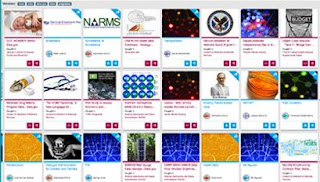
SailFish Exchange for Data Curation
A clever idea. A Pinterest for data. Approach to data democratization. From Booz Allen Hamilton
.
Sailfish™ Exchange
Socially Charged Data Curation
Sailfish Exchange simplifies the data curation process. Using a social community, you can find, collect, and share your data sets. ... "
.
Sailfish™ Exchange
Socially Charged Data Curation
Sailfish Exchange simplifies the data curation process. Using a social community, you can find, collect, and share your data sets. ... "

Saturday, April 08, 2017
Document Review Inquiry
In the Gartner Blog, they mention a process called a Document Review Inquiry . Which like the author , I had never hear of. Worth a look. A means towards curation for Gartner, apparently. The same approach could lead you towards a way to automate the storage and retrieval of accumulated knowledge. And then add an advisor to help with the curation.
Tuesday, December 01, 2015
Wikipedia Using AI
Curating knowledge is an important aspect of knowledge management. I had wondered that the informal enrollment of editors for the Wikipedia could result in mixed results. My few attempts led to quick discouragement.
Once you build a system to understand its ideal structure, you could further use that method to automate some editing tasks. I had already seen people using the taxonomy of the WP to structure their knowledge, this same AI could be used to manage external uses.
In Wired:
" .... Aaron Halfaker just built an artificial intelligence engine designed to automatically analyze changes to Wikipedia.
Wikipedia is the online encyclopedia anyone can edit. In crowdsourcing the creation of an encyclopedia, the not-for-profit website forever changed the way we get information. It’s among the ten most-visited sites on the Internet, and it has swept tomes like World Book and Encyclopedia Britannica into the dustbin of history. But it’s not without flaws. If anyone can edit Wikipedia, anyone can mistakenly add bogus information. And anyone can vandalize the site, purposefully adding bogus information. Halfaker, a senior research scientist at the Wikimedia Foundation, the organization that oversees Wikipedia, built his AI engine as a way of identifying such vandalism. ... "
Once you build a system to understand its ideal structure, you could further use that method to automate some editing tasks. I had already seen people using the taxonomy of the WP to structure their knowledge, this same AI could be used to manage external uses.
In Wired:
" .... Aaron Halfaker just built an artificial intelligence engine designed to automatically analyze changes to Wikipedia.
Wikipedia is the online encyclopedia anyone can edit. In crowdsourcing the creation of an encyclopedia, the not-for-profit website forever changed the way we get information. It’s among the ten most-visited sites on the Internet, and it has swept tomes like World Book and Encyclopedia Britannica into the dustbin of history. But it’s not without flaws. If anyone can edit Wikipedia, anyone can mistakenly add bogus information. And anyone can vandalize the site, purposefully adding bogus information. Halfaker, a senior research scientist at the Wikimedia Foundation, the organization that oversees Wikipedia, built his AI engine as a way of identifying such vandalism. ... "
Friday, November 27, 2015
Brain Pickings and More
In the NYT Books Review:
‘Dark Matter and the Dinosaurs,’ by Lisa Randall ... review by Maria Popova who is the founder of BrainPickings.org and an M.I.T. Futures of Entertainment fellow. ... On brains, intelligence, stoytelling, entertainment, culture and more. Will attempt to curate further here ... I consider myself mostly a brain picker as well.
‘Dark Matter and the Dinosaurs,’ by Lisa Randall ... review by Maria Popova who is the founder of BrainPickings.org and an M.I.T. Futures of Entertainment fellow. ... On brains, intelligence, stoytelling, entertainment, culture and more. Will attempt to curate further here ... I consider myself mostly a brain picker as well.
Thursday, November 12, 2015
SailFish Exchange for Data Curation
A clever idea. A Pinterest for data. Approach to data democratization. From Booz Allen Hamilton
.
Sailfish™ Exchange
Socially Charged Data Curation
Sailfish Exchange simplifies the data curation process. Using a social community, you can find, collect, and share your data sets. ... "
.
Sailfish™ Exchange
Socially Charged Data Curation
Sailfish Exchange simplifies the data curation process. Using a social community, you can find, collect, and share your data sets. ... "
Friday, October 09, 2015
Linkedin Elevate for Enterprise Content Sharing
Interesting play. Talked to them about this when in the enterprise. My own experience with Linkedin, primarily with Groups and Mail, is that Linkedin has an awkward information management methodology, especially with media like images, Web and video resources. Please fix this, Linkedin is so universal, it needs to be good. They have much improved mobile sharing experience, but still very different experiences on different devices.
See also announcement in the Linkedin blog. Will take a closer look.
In Adage: LinkedIn Rolls Out Elevate Content-Sharing Platform
Companies Including Visa, Unilever and CEB Are Early Customers
LinkedIn today is rolling out Elevate, a content curation and social sharing platform, designed to help enterprises turn their employees into brand advocates. .... LinkedIn first announced Elevate in April, and its early customers have included Visa, Unilever and CEB. .... "Elevate enables employee advocacy at scale," he added. "Now employers have an entire employee base to be activated so they can share content across their social and professional networks." ....
The subscription-based service is aimed at companies with 2,000 or more employees, and is available on desktop or via mobile app. It provides a platform that lets companies curate content from internal and external sources on the web, categorize content, set up guidelines about social sharing, give employees access to content, and measure the impact of content sharing on various metrics, from profile views to company page views. .... "
See also announcement in the Linkedin blog. Will take a closer look.
In Adage: LinkedIn Rolls Out Elevate Content-Sharing Platform
Companies Including Visa, Unilever and CEB Are Early Customers
LinkedIn today is rolling out Elevate, a content curation and social sharing platform, designed to help enterprises turn their employees into brand advocates. .... LinkedIn first announced Elevate in April, and its early customers have included Visa, Unilever and CEB. .... "Elevate enables employee advocacy at scale," he added. "Now employers have an entire employee base to be activated so they can share content across their social and professional networks." ....
The subscription-based service is aimed at companies with 2,000 or more employees, and is available on desktop or via mobile app. It provides a platform that lets companies curate content from internal and external sources on the web, categorize content, set up guidelines about social sharing, give employees access to content, and measure the impact of content sharing on various metrics, from profile views to company page views. .... "
Tuesday, March 10, 2015
Curating Personalization through E-commerce
Good approach, in use: In Progressive Grocer.
How grocers can customize and curate through e-commerce
E-commerce is a good place for grocers to start to boost customization and curation efforts, according to a panel of experts at the FMI Midwinter Executive Conference that included Bi-Lo Holdings Marketing Chief Bill Nasshan and Nestle USA CEO Paul Grimwood. Retailers should approach customization and curation first by working with manufacturers to get an understanding of shoppers through their consumer insights and product expertise and then by studying shoppers' purchasing behavior and engaging them via online dialogue, the panelists said. ... "
How grocers can customize and curate through e-commerce
E-commerce is a good place for grocers to start to boost customization and curation efforts, according to a panel of experts at the FMI Midwinter Executive Conference that included Bi-Lo Holdings Marketing Chief Bill Nasshan and Nestle USA CEO Paul Grimwood. Retailers should approach customization and curation first by working with manufacturers to get an understanding of shoppers through their consumer insights and product expertise and then by studying shoppers' purchasing behavior and engaging them via online dialogue, the panelists said. ... "
Monday, April 15, 2013
JC Penney and Pricing
Economist MJ Perry on the complexity and psychology of pricing. Referencing an NYT article: " ... how the “everyday low pricing” model at J.C. Penney’s seems to have backfired. One explanation is that many consumers don’t necessarily want “fair prices” or “everyday low prices,” they instead want the thrill of getting a great deal when something is on sale, to feel that rush of “consumer surplus” running through their bodies! ... "
Tuesday, April 09, 2013
Robotics Week: Free Robotics App
 IEEE Spectrum tells us that this week is National Robotics week. In honor of that they are offering a free App that covers many aspects of Robotics research and application. Great way to get up to speed/ I paid a few dollars when I get this months ago. Well worth this new price. More about the offer here.
Tuesday, March 26, 2013
Read Me: I am a Curator too
I have been playing with Flipboard for some time. On the iPhone and Pad. A very nice, image-oriented way to organize and deliver information. A more sophisticated RSS feed. I just saw a good discussion and video about the intent of the Flipboard service, which made a big deal about how everyone can be a curator there. Their newest version allows you to create slick magazine-like creations. This struck me as what I have been doing here for ten years publicly, and three years privately before that. I am primarily a curator of a number of topics that support by skills. Essentially what is now called business analytics. Most of what I do is curate essential information that relates to the work I do. I save the bulk of my applied creativity for actual paying projects. This blog also forms a repository for my knowledge and the knowledge of my collaborators. I often use it as a memory of my past work. Read it and you will get an idea of what interests me. You can read me on Flipboard by copying the URL of this site there.
Want to use my skills? Work with me? Have an idea you want promoted here? Or collaborate with me by writing an interesting post? Contact me at the URL embedded in the left hand column.
Thanks,
Franz
Want to use my skills? Work with me? Have an idea you want promoted here? Or collaborate with me by writing an interesting post? Contact me at the URL embedded in the left hand column.
Thanks,
Franz
Thursday, March 07, 2013
Addressing Showrooming with Price Matching
In Shopperception. Good thoughts on this threat: " ... Throughout this article we presented a possible threat and how retailers are reacting with defensive campaigns that may just make people wonder about prices even more. But as we keep saying in our blog, there are many factors involved in any shopping trip that create the overall experience and loyalty. Shoppers demand more personalization in terms of product choice, return polices, adequate delivery and product quality; it is not just a race to proclaim the cheapest deal at all. As Durchslag from Business Insider said “Once they’re in the store, they’re yours to lose”..... "
Tuesday, March 05, 2013
IBM In-Store Image Recognition App

Thursday, February 21, 2013
Price Chopper and Vine
In an interesting retail/CPG example. Twitter owned Vine is being used by Price Chopper for marketing with six second videos.
Saturday, February 16, 2013
Combating Showrooming With Rebates
Good piece by Theresa Wabler. " .... They key to combating the shopper trend of showrooming is finding creative approaches that serve the consumer and benefit the business, not hurt it. If all consumers care about is lower price, retailers must figure out how to deliver the milk without giving away the cow for free, so to speak. Rebate strategies can respond to these low price demands while also generating loyalty and ongoing relationships with consumers. It is possible to give in to the value-seeking shopper that is here to stay while also growing value for the business. ... "
Tuesday, January 08, 2013
Price Matching Online
In TheVerge: Target says they will start price-matching Amazon year round. As an attempt in part to defer losses to to show rooming activities of mobile enabled consumers.
Subscribe to:
Posts (Atom)